
On this page
- How do the three metals compare?
- How does Katy's climate affect each metal?
- When does each metal make sense?
- What about vinyl gutters?
- Can metals be mixed?
- Related pages
- How long does each metal last in practice?
- What are the hidden costs of each?
- Which looks right on a Katy house?
- How should the metals be chosen for an outbuilding?
- What about mixing metals on one house?
- What questions should I ask about the metal?
How do the three metals compare?
| Aluminum | Steel | Copper | |
|---|---|---|---|
| Rust | Does not rust | Rusts where coating is broken | Does not rust; patinas |
| Weight | Light | Heavy | Heavy |
| Stiffness | Moderate; thicker coil is stiffer | High | Soft |
| Seamless on site | Yes, common | Possible | Possible, less common |
| Colors | Many baked-on colors | Painted colors | Natural; ages to brown and green |
| Typical life | 20 years or more | 20 years or more if kept coated | Many decades |
| National installed price | About $9 to $13 a foot (5-inch) | About $6 to $14 a foot | About $25 to $40 a foot |
Katy Gutter Guys connects callers with independent local gutter contractors, who give the estimates and do the work.
How does Katy's climate affect each metal?
Humidity and rain. NOAA's normals put Katy's rainfall at about 50 inches a year, and the air is humid for much of the year. Aluminum and copper shrug that off. Steel depends on its coating; once scratched, cut or left holding wet debris, it can rust.
Heat and sun. Long summers fade painted finishes slowly on south and west elevations and dry the sealant at joints. That affects aluminum and steel more than soldered copper.
Wind, limbs and hail. Tropical storms bring wind and falling limbs. Hurricane Beryl brought 76 mph gusts at Sugar Land's airport in 2024. Steel resists denting best; 0.032-inch aluminum is a good middle ground; copper dents most easily.
When does each metal make sense?
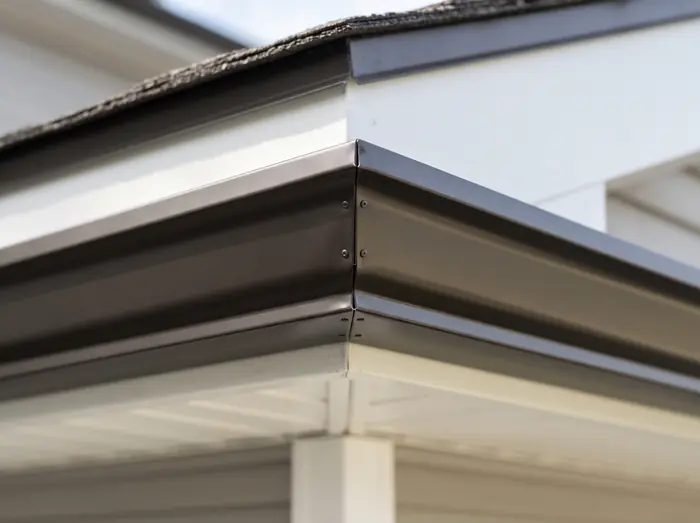
Aluminum is the default for most Katy homes: seamless, light, rust-free and matched to HOA colors. Ask for 0.032-inch coil on long runs and two-story homes. See aluminum gutters.
Steel suits barns, shops and some farmhouse-style homes on acreage toward Fulshear, Simonton or Pattison, where stiffness and a heavier look matter. Keep it clean and touch up scratches.
Copper suits custom homes, traditional elevations and accents over entries and bay windows. It lasts the longest and costs the most. Copper must never touch aluminum or galvanized steel. See copper gutters.
What about vinyl gutters?
Vinyl gutters are sold at home centers for do-it-yourself installs. They are cheap but become brittle in strong sun and flex under heavy loads. They are uncommon on Katy homes for that reason.
Can metals be mixed?
Yes, carefully. Copper accents with aluminum elsewhere is a common combination, provided the metals never touch and copper runoff never drains onto aluminum or galvanized steel.
Related pages
How long does each metal last in practice?
Lifespan depends far more on installation and upkeep than on the label. A well-hung aluminum system on sound fascia, cleaned regularly and with corners resealed when they start to seep, often serves 20 years or more. A thin aluminum system on spikes, left full of leaves, can fail in half that. Steel lasts as long as its coating does; once rust starts at a scratch or a seam that holds water, it spreads. Copper can last for generations, but only if it is soldered properly, fastened with compatible metals and kept away from aluminum and galvanized steel.
What are the hidden costs of each?
| Metal | Hidden costs |
|---|---|
| Aluminum | Resealing corners every several years; replacing dented sections after hail or limbs |
| Steel | Touching up scratches; replacing rusted sections; heavier, so fascia must be sound |
| Copper | Specialist installers; soldered repairs; staining of stone or concrete below |
Which looks right on a Katy house?
Most Katy homes are brick, stone or fiber-cement siding with painted trim, in communities with color standards. Aluminum in a trim-matched color, or dark bronze or black on brick and stone, suits almost all of them. Copper looks right on custom homes with traditional detailing, often as accents over an entry or a bay window, and on some homes around Kelliwood, Cross Creek Ranch and Fulshear. Steel suits barns, shops and farmhouse-style homes on acreage toward Simonton, Pattison and Brookshire.
How should the metals be chosen for an outbuilding?
Barns, shops and metal buildings have big roof areas and often take knocks from equipment. Steel or heavy aluminum box gutters with 4x5 or larger downspouts are common. Steel gutters on a metal building should be matched to the building's own trim and fasteners so dissimilar metals do not touch. Water from a shop roof should be led away from the slab and doorways, where it would otherwise undercut concrete or turn the entrance to mud.
What about mixing metals on one house?
Mixing works when it is planned. Copper must never touch aluminum or galvanized steel, including through fasteners, straps or flashing, and copper runoff should never drain onto them. A common approach is copper over the front entry and a bay window, with dark bronze aluminum elsewhere, so the two read as a deliberate pair from the street. Ask the contractor how they will keep the metals apart where runs meet.
What questions should I ask about the metal?
- What thickness is the metal, in inches?
- Is the finish baked on, and what color names are available?
- What hangers and fasteners will be used, and are they compatible with the gutter metal?
- How will joints be made: sealant, rivets, solder?
- What warranty, if any, applies to the finish, in writing?